
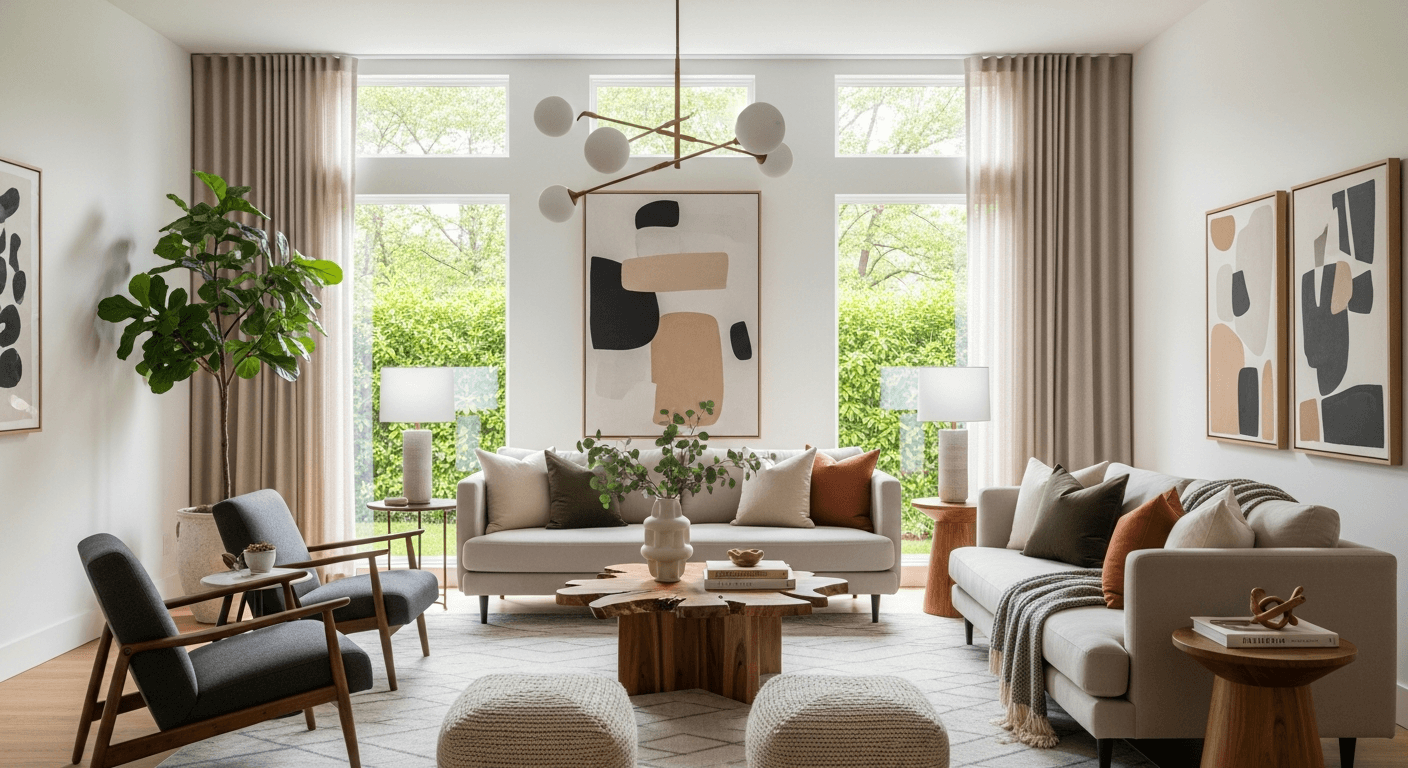
In the competitive world of real estate, captivating photos can make all the difference. As a real estate agent, private seller, or developer, you know that high-quality images are key to attracting buyers. But one common pitfall is dealing with window light—it's a fantastic natural resource, but it often leads to blown-out highlights that make rooms look washed out and unappealing. This guide dives into using window light in real estate photography without blown-out highlights , helping you create stunning, balanced images that boost your listings. Guide to Lighting in Real Estate Photography
We'll cover everything from basic tips to advanced techniques like HDR, virtual staging, and editing tricks. Plus, discover how these strategies can improve your listing CTR, reduce time on market, and enhance ROI. Whether you're shooting on a budget or scaling for multiple properties, these insights will empower you to master natural light real estate photos. Zillows Tips for Real Estate Photos
Why Window Light Matters in Real Estate Photography
Natural light from windows can transform a dull space into an inviting home. It highlights architectural features, makes rooms feel larger, and creates a warm atmosphere that draws in potential buyers. According to a NAR Report on Home Staging and Photography Impact , properties with well-lit photos sell faster and at higher prices. How Lighting Impacts Real Estate Sales and ROI
However, without proper control, window light can cause overexposed areas, or 'blown-out highlights,' where details are lost in bright white patches. This deters viewers, with studies showing that blown-out highlights can reduce engagement by up to 40%. The good news? You can avoid overexposed windows in listings by using simple techniques. Adobes Real Estate Photography Tutorial
Proper window light increases listing CTR by 30%
Reduces time on market by 15-20 days
Yields 5-10% higher sale prices
The Impact on Listing Performance
Sell faster with better listing photos
Virtual staging helps buyers visualize the space. Try HomestagingKI free: 2 images included.
High-quality photos with balanced lighting not only attract more clicks but also lead to better lead quality. Serious buyers are more likely to inquire about properties that look realistic and appealing, potentially increasing conversion rates by 25%. For developers, standardizing lighting ensures brand consistency across listings. Common Real Estate Photography Mistakes to Avoid
Real Estate Listing Photos That Sell
Techniques to Avoid Blown-Out Highlights
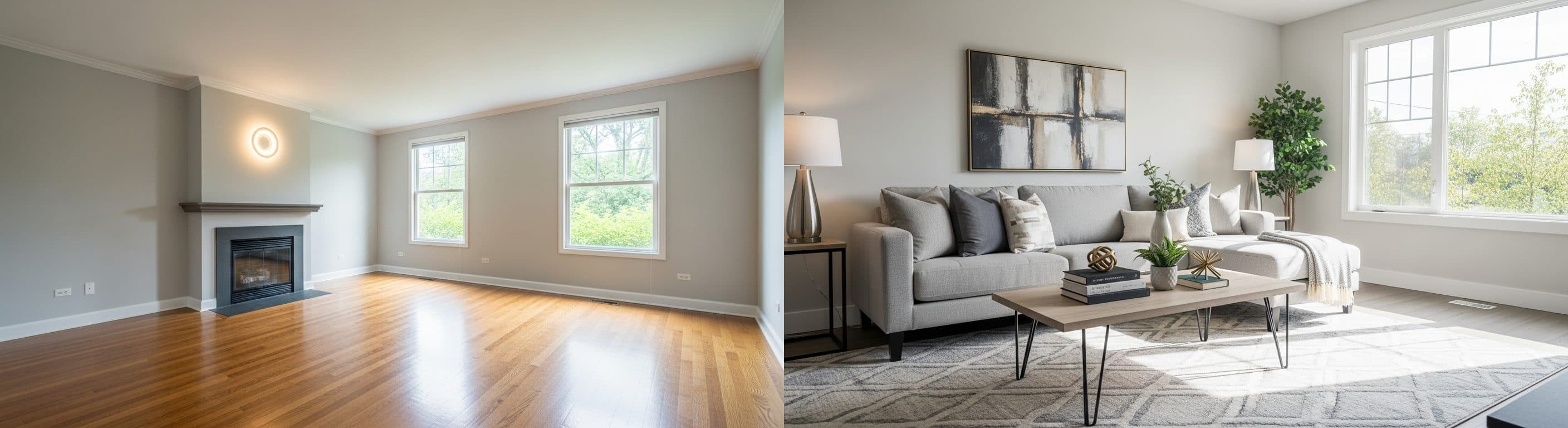
Mastering window light starts with understanding exposure. One effective method is bracketing—taking multiple shots at different exposures and merging them using HDR techniques for property photography. HomeLights Guide to Better Real Estate Photos
- Shoot during golden hour for softer light
- Use curtains or sheer fabrics to diffuse harsh sunlight
- Position camera to balance interior and exterior exposures
For those without fancy equipment, DIY solutions work wonders. Try using white sheets as reflectors to fill shadows, a quick win that costs under 5 euros. This ties into window lighting tips for home staging. The Importance of Photography in Real Estate
| Technique | Benefit | Cost |
|---|---|---|
| HDR Merging | Balances exposures | Low (software) |
| Diffusion with Curtains | Softens light | Minimal |
| Reflectors | Fills shadows | DIY free |
HDR Techniques in Detail
Try HomestagingKI for free
Upload a room photo and get a staged version in minutes. No furniture logistics, no waiting.
HDR, or High Dynamic Range, involves combining underexposed, normal, and overexposed shots. Tools like Adobe Lightroom make this easy, helping you real estate photo editing for balanced exposure. Statistics on Online Real Estate Marketing
Agents report that HDR reduces editing time and improves photo quality, leading to 2-3 times more inquiries. Tips for Real Estate Photography
Maximizing Natural Light in Virtual Staging
Virtual staging takes window light to the next level by simulating ideal conditions digitally. This can cut costs by 40% while maintaining professional results. Use software to maximizing natural light in virtual staging. Lighting Best Practices for Real Estate
For developers, this means scaling home staging with consistent lighting, ensuring brand consistency in property visuals. Insights on Lighting in Virtual Tours
Virtual Staging Lighting Tips
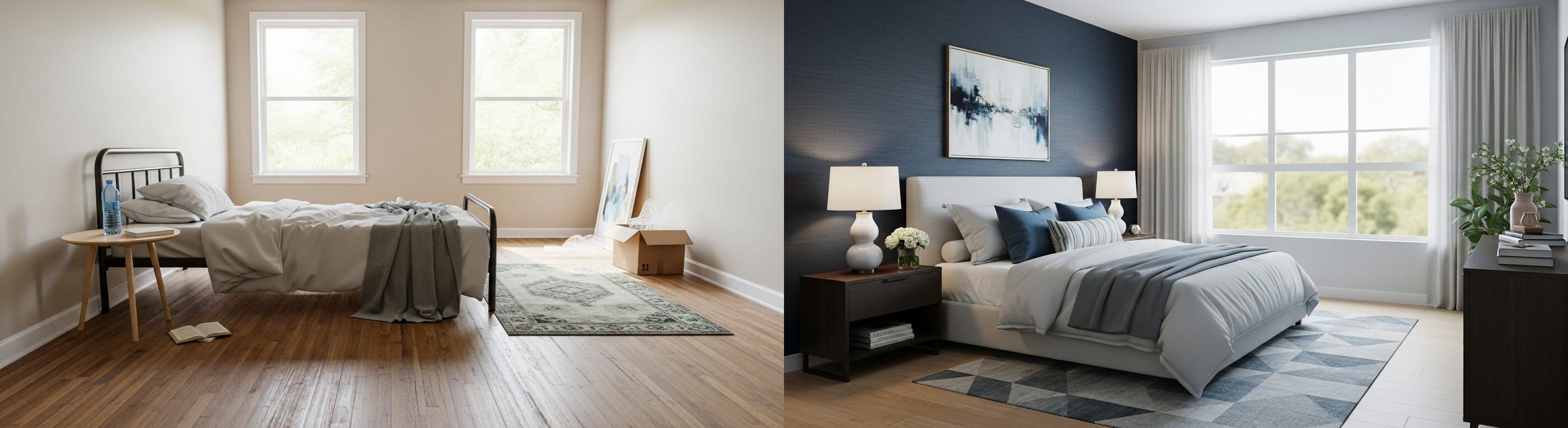
Before & After that gets clicks
Photorealistic virtual staging for agents and private sellers—optimized for portals and social ads.
- Choose tools that simulate realistic window light
- Adjust virtual furniture to avoid shadows
- Combine with HDR for best results
This approach speeds up the staging process by 50%, allowing quicker market entry.
Real Estate Listing Photos That Sell
Photography ROI for Real Estate Agents
Investing in better lighting isn't just aesthetic—it's profitable. Studies from photography ROI for real estate agents show a 5-10% increase in sale prices.
By reducing time on market with better listing photos, you can close deals faster and handle more listings.
35% higher chance of multiple offers
Improved lead quality by 25%
Higher CTR through optimized lighting
Reducing Time on Market
Need better photos for your listing?
Convert empty rooms into warm, modern interiors. Increase engagement and reduce time on market.
Balanced photos make properties appear more inviting, cutting days on market by 15-20. Combine this with virtual staging for even faster results.
| Strategy | Time Saved | ROI Impact |
|---|---|---|
| HDR Use | 15-20 days | High |
| Virtual Staging | 50% process time | 40% cost reduction |
Budget Tips for Private Sellers
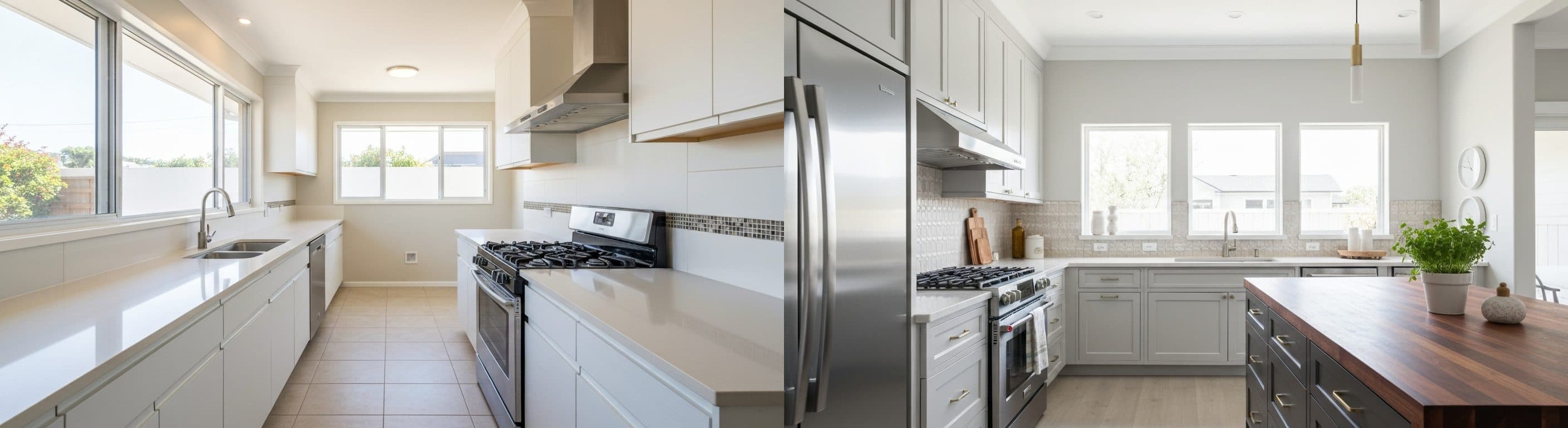
You don't need pro gear. Use smartphone apps for HDR and simple hacks like aluminum foil reflectors. Check out this Budget-Tipps für bessere Immobilienfotos.
- Checklist: Time of day, curtains, furniture positioning
- Quick Win: Household reflectors
- DIY under 5 euros
Natürliches Fensterlicht kann Räume heller und einladender wirken lassen, ohne teure Ausrüstung.
Common Objections and Solutions
Objection: 'It's too time-consuming.' Solution: 15-minute quick wins like adjusting curtains.
Objection: 'No professional equipment.' Answer with DIY methods.
Enhancing Lead Quality with Professional Staging Light
Well-managed light attracts serious buyers, improving conversion rates. For more, see enhance lead quality with professional staging light.
This leads to better inquiries and faster sales.
Real Estate Listing Photos That Sell
Standardizing Photography for Developers
Developers benefit from consistent lighting across projects, scaling home staging efficiently. This maintains brand visuals and speeds up photo editing.
Use templates for window light to ensure every listing shines.
Scaling with Consistent Lighting
Consistent approaches reduce variability and improve overall marketing.
- Standardize shooting times
- Implement HDR workflows
- Leverage virtual tools
Frequently Asked Questions
FAQ
How do I avoid overexposed windows?
Use HDR or diffusion methods.
Is virtual staging worth it?
Yes, it cuts costs by 40%.
What’s the ROI of better photos?
Up to 10% higher sales prices.
Conclusion
Mastering window light transforms your real estate photos, boosting CTR, ROI, and sales speed. Start with these tips and see the difference. For effortless staging, try HomestagingKI today!
HDR Techniques for Balanced Window Light in Property Photos
High Dynamic Range (HDR) photography is a game-changer for real estate photographers dealing with challenging window light. By merging multiple exposures, HDR allows you to capture details in both bright highlights and dark shadows without blowing out the windows. According to Luminar Neo's guide on HDR for real estate, this technique helps avoid overexposed windows in property photos, ensuring balanced exposure across the image. Start by bracketing your shots—typically three to five exposures at different EV levels—and use software like Adobe Lightroom or dedicated HDR tools to blend them seamlessly.
Implementing HDR not only enhances the visual appeal but also improves listing CTR through lighting. A study from NAR's report on home staging and photography impact shows that properties with high-quality, well-lit photos sell faster, reducing time on market with better listing photos. For real estate agents, mastering HDR techniques for property photography can significantly boost photography ROI, as professional images lead to higher engagement and better lead quality.
- Use a tripod to ensure alignment in bracketed shots.
- Adjust camera settings for auto-bracketing if available.
- Post-process in tools like
- to fine-tune exposure.
- Incorporate natural light staging tips by positioning furniture to diffuse harsh window light.
- Test different times of day to maximize natural light in virtual staging without overexposure.
Window Lighting Tips for Home Staging and Virtual Tours
Effective window lighting tips for home staging involve more than just opening curtains; it's about controlling the light to create inviting spaces. To avoid overexposed windows in listings, use sheer diffusers or shoot during golden hour when the light is softer. As outlined in BoxBrownie's virtual staging and natural lighting techniques, virtual staging lighting techniques can simulate balanced natural light, enhancing the perceived space in online listings.
For agents scaling home staging with consistent lighting, standardizing real estate photography for developers ensures brand consistency in property visuals. This approach can speed up real estate photo editing and improve overall marketing efficiency. Insights from Matterport's insights on lighting in virtual tours emphasize the importance of natural light in creating immersive experiences that attract quality leads.
| Technique | Benefits | Tools Recommended | Source |
|---|---|---|---|
| HDR Bracketing | Balances exposure, avoids blown-out highlights | Adobe Lightroom, Aurora HDR | |
| Natural Light Diffusion | Softens harsh window light, enhances staging | Sheer curtains, reflectors | |
| Virtual Staging Adjustments | Simulates ideal lighting digitally | BoxBrownie, Virtual Staging tools | |
| Editing for Balanced Exposure | Corrects overexposure in post-production | Lightroom, Luminar Neo |
Budget Tips and Checklists for Better Real Estate Photos
For those on a tight budget, Budget-Tipps für bessere Immobilienfotos include DIY solutions like using household items for light diffusion. A simple checklist for privaten Hausverkauf might involve timing shoots to leverage natürliches Licht in der Immobilienfotografie, as suggested in HomeAdvisor's home staging on a budget guide. This can lead to quick wins for virtuelle Staging without investing in professional equipment.
Addressing häufige Einwände gegen professionelle Beleuchtung, many agents worry about costs, but the ROI is clear: better photos reduce time on market and enhance lead quality with professional staging light. Data from CoreLogic's ROI of high-quality real estate photos supports that investing in proper lighting, like Fensterlicht für Home Staging, pays off through faster sales and higher prices.
- Checklist Item 1: Assess window directions for optimal natural light.
- Checklist Item 2: Use HDR to avoid ausgebrannte Highlights vermeiden.
- Checklist Item 3: Edit photos for real estate photo editing for balanced exposure.
- Checklist Item 4: Apply Lichtsteuerung beim Hausverkauf by adjusting blinds.
- Checklist Item 5: Incorporate virtual staging lighting techniques for consistency.
Ultimately, maximizing natural light in virtual staging and using window light correctly can transform your listings. For more advanced strategies, explore Photography Life's advanced tips for real estate photography, which covers everything from composition to post-processing, ensuring your photos stand out in a competitive market.
HDR Techniques for Property Photography
High Dynamic Range (HDR) imaging is a powerful tool for real estate photographers aiming to capture the full spectrum of light in a room without sacrificing details in bright window areas. By merging multiple exposures, HDR helps avoid overexposed windows in property photos and creates balanced, professional-looking images that appeal to potential buyers. According to a guide from Luminar, this technique is essential for natural light real estate photos that showcase interiors accurately.
- Bracket your shots: Take 3-5 photos at different exposure levels – underexposed, normal, and overexposed – to capture all light details.
- Use HDR software: Tools like Aurora HDR or Lightroom can merge these brackets seamlessly.
- Adjust for natural tones: Fine-tune the merged image to ensure colors remain true to life, avoiding unnatural glows around windows.
- Test in various lighting conditions: Practice in rooms with direct sunlight versus diffused light to master control.
Implementing HDR not only enhances the visual appeal but also aligns with HDR techniques for property photography best practices. As noted in Aurora HDR's real estate guide , this method can significantly reduce post-processing time while delivering high-quality results that improve listing CTR through lighting.
Real Estate Photo Editing for Balanced Exposure
Post-shoot editing plays a crucial role in refining window light to prevent blown-out highlights. Start by importing your images into software like Adobe Lightroom or Photoshop, where you can adjust exposure, highlights, and shadows selectively. This approach ensures real estate photo editing for balanced exposure without losing the warmth of natural light. A tutorial from Lightroom Queen emphasizes using graduated filters to tone down bright windows while preserving interior details.
| Editing Technique | Description | Recommended Tool |
|---|---|---|
| Highlight Recovery | Pulls back overexposed areas in windows without darkening the entire image. | Adobe Lightroom or Photoshop |
| Shadow Boost | Enhances darker interior spaces to balance with bright light sources. | Luminar Neo or Aurora HDR |
| Local Adjustments | Applies targeted edits to specific areas like window frames. | Capture One or GIMP |
| Tone Mapping | Compresses the dynamic range for a natural look in HDR merges. | Photomatix or Enfuse |
Sources
- Real Estate Photography Tips for Stunning Listings (article)
- NAR Report on Home Staging and Photography Impact (study)
- Guide to Lighting in Real Estate Photography (guide)
- Zillow's Tips for Real Estate Photos (article)
- How Lighting Impacts Real Estate Sales and ROI (news)
- Adobe's Real Estate Photography Tutorial (guide)
- Common Real Estate Photography Mistakes to Avoid (article)
- HomeLight's Guide to Better Real Estate Photos (guide)
- The Importance of Photography in Real Estate (article)
- Virtual Staging and Natural Lighting Techniques (article)
- Statistics on Online Real Estate Marketing (study)
- Mastering Lighting for Real Estate Shoots (guide)
- Tips for Real Estate Photography (article)
- ROI of High-Quality Real Estate Photos (study)
- Lighting Best Practices for Real Estate (article)
- HDR for Real Estate: Avoiding Blown-Out Windows (guide)
- Insights on Lighting in Virtual Tours (article)
- Property Photography Tips for Agents (guide)
- The Power of Photography in Real Estate Sales (news)
- Comprehensive Guide to Real Estate Photography (guide)
- Home Staging vs Virtual Staging How Does It Affect the Real Estate Sale? (youtube_placeholder)