
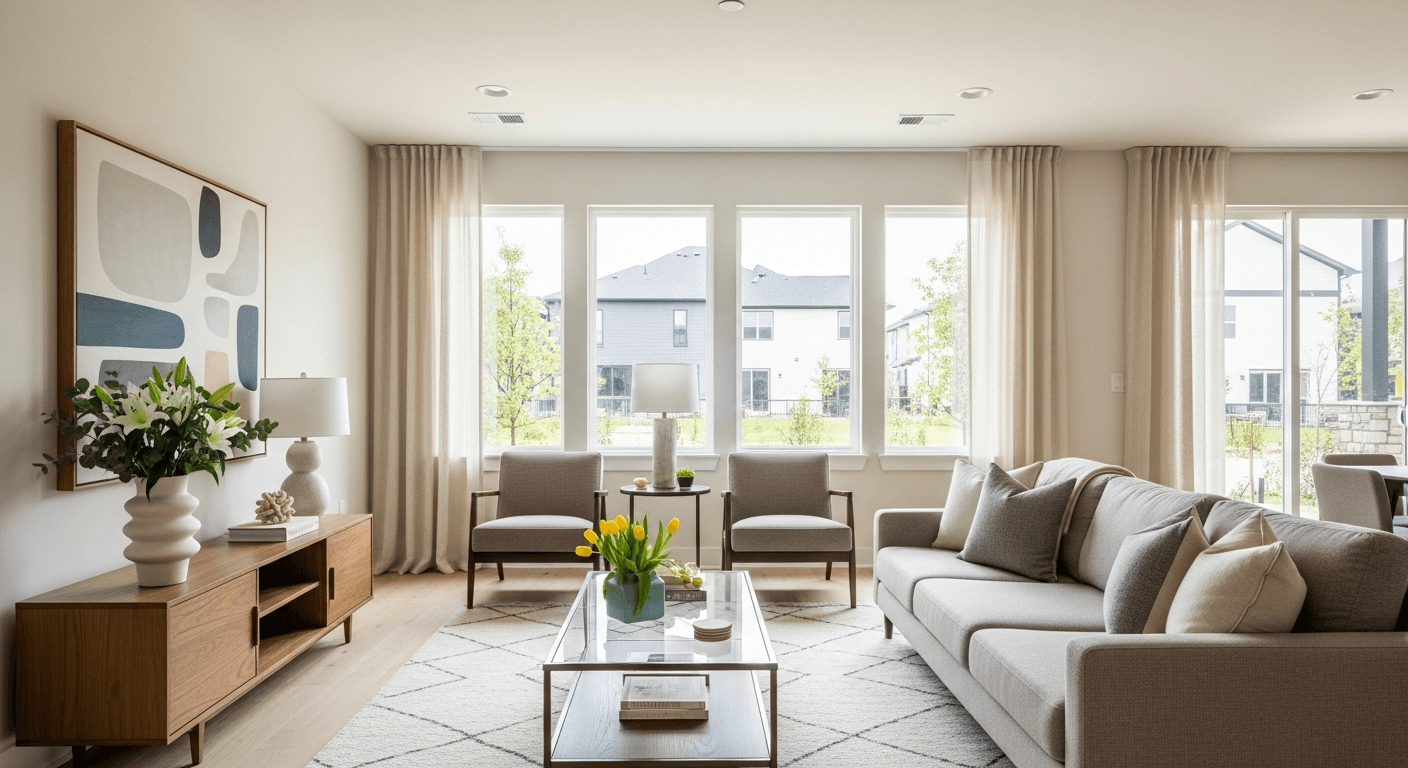
Why “Open House planen” is a revenue lever (not a weekend chore)
An Open House is often treated like a simple viewing window. In reality, it’s a compact marketing campaign with a measurable impact on demand, perception, and conversion. When you plan an Open House like a repeatable process, you can improve three metrics that matter to agents, private sellers, and developers: (1) listing attention (CTR), (2) lead quality, and (3) time-on-market.
Across industry guides and studies, well-executed Open Houses are associated with stronger buyer engagement and faster decision cycles—especially when the property is presented visually and the follow-up is structured. Many teams also report that Open Houses can lift listing CTR by roughly 15–25% and reduce time on market by 20–30% when they attract qualified visitors and create urgency through a clear next step. For planning frameworks and best practices, see Realtor.com’s Open House timeline, Zillow’s Open House tips, and the NAR Open House research.
Open House preparation: goals, KPIs, and a simple ROI model
Sell faster with better listing photos
Virtual staging helps buyers visualize the space. Try HomestagingKI free: 2 images included.
Before you build an Ablaufplan Open House, define what success looks like. Otherwise, you’ll optimize for foot traffic instead of outcomes.
Set one primary goal (pick 1) and two secondary goals
- Primary goal examples: generate 8–15 qualified leads, secure 3 second showings, collect 2 written offers, or validate pricing with buyer feedback.
- Secondary goal examples: increase listing saves/shares, lift CTR on the listing, create social proof (photos, short video, testimonials), build a buyer pipeline for future listings.
KPIs that actually tell you if the Open House worked
Try HomestagingKI for free
Upload a room photo and get a staged version in minutes. No furniture logistics, no waiting.
| KPI | How to measure | Target benchmark (practical) | Why it matters |
|---|---|---|---|
| Visitors (raw) | Door count / sign-in count | 10–40 depending on location | Volume matters, but only with quality |
| Qualified leads | Meets criteria (timeline, budget, intent) | 30–60% of sign-ins | Quality drives conversion |
| Next-step rate | Booked showing / call within 48h | 15–35% | Strong predictor of offers |
| Follow-up response rate | Replies to SMS/email | 25–50% | Shows message-market fit |
| Listing CTR lift | Portal CTR before/after event | +10–25% | More demand = better price leverage |
| Time on market | Days to offer / contract | -20–30% in strong execution cases | Speed reduces carrying costs and discount pressure |
Open House ROI: a quick calculation you can standardize
Use a simple model to decide how much effort and budget makes sense. Many teams estimate Open House ROI in the 200–400% range when costs are controlled and follow-up is disciplined (see ROI discussions in Forbes Real Estate Council on maximizing ROI and RealEstateExpress on calculating Open House ROI).
| Item | Example | Formula |
|---|---|---|
| Total cost | €85 signs + €35 print + €30 refreshments + €0 DIY design | C_total = sum(all costs) |
| Lead value | 1 buyer lead worth €300 expected gross (or your internal value) | V_lead = expected profit per qualified lead |
| Qualified leads | 12 sign-ins, 6 qualified | L_q = qualified leads |
| ROI | If V_lead=€300, L_q=6, C_total=€150 | ROI = (V_lead × L_q − C_total) / C_total |
The master timeline: Open House planen from T-14 days to T+48 hours
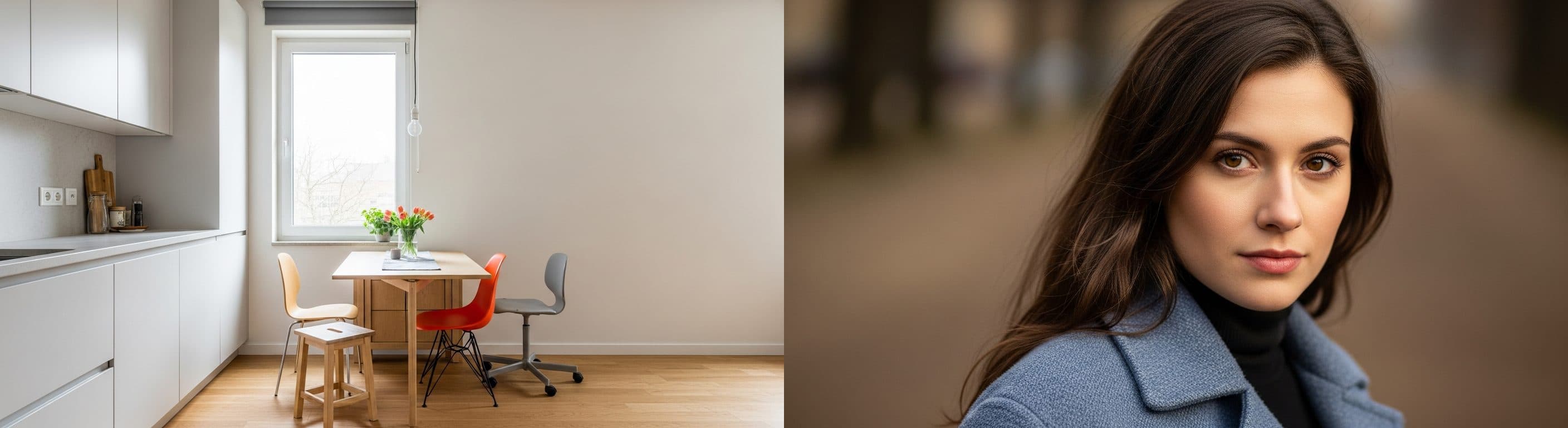
Before & After that gets clicks
Photorealistic virtual staging for agents and private sellers—optimized for portals and social ads.
This is the Open House preparation timeline you can reuse for every listing. It’s designed to reduce chaos, standardize quality, and improve conversion—especially useful for teams and developers who need repeatability and brand consistency.
| When | What to do | Owner | Output |
|---|---|---|---|
| T-14 to T-10 | Define target buyer, pricing narrative, and route plan; schedule cleaning and staging; set sign-in method (QR + backup paper). | Agent/Seller/PM | Open House brief + checklist |
| T-10 to T-7 | Create marketing assets: listing refresh, social posts, email invite, neighborhood flyers; order signs; prep FAQs. | Marketing/Agent | Asset pack + print order |
| T-7 to T-3 | Home Staging + repairs + declutter; test lighting; plan scent strategy; confirm helpers; build follow-up sequences. | Stager/Seller/Agent | Photo-ready property + scripts |
| T-48 to T-24 | Deep clean; set up info station; print brochures; confirm refreshments; test Wi-Fi; prepare security plan. | Seller/Agent | Event kit ready |
| Event day (T-0) | Execute Ablaufplan Open House (see next section). | Agent + helper | Qualified leads + next steps booked |
| T+0 to T+2h | Immediate debrief; tag leads; send “nice to meet you” SMS; update seller/dev team. | Agent | Hot/warm/cold segmentation |
| T+24 to T+48h | Follow-up calls; schedule showings; send disclosure docs; retargeting audience; adjust pricing narrative if needed. | Agent/Team | Second showings + offers pipeline |
For additional timeline ideas, compare Realtor.com’s schedule with checklists from Inman and Rocket Mortgage.
Ablaufplan Open House (event-day schedule you can print)
Below is a practical Open House Ablaufplan for a 2-hour window (e.g., 13:00–15:00). Adjust times, but keep the structure: setup → welcome → guided flow → qualification → next step → close.
| Time | Action | Details | Goal |
|---|---|---|---|
| T-90 min | Arrival + setup | Open curtains, turn on all lights, set temperature, place signs, test QR sign-in, set brochures, secure valuables. | Perfect first impression + safety |
| T-60 min | Walkthrough + “story points” | Define 5 highlights (layout, light, upgrades, neighborhood, running costs). | Consistent pitch |
| T-45 min | Staging touch-ups | Fresh towels, pillows, flowers, trash empty, scent subtle, bathroom check. | Emotional appeal |
| T-30 min | Team briefing | Roles: greeter, floater, security/monitor, note-taker. Review objection handling. | Smooth flow |
| Start | Welcome + sign-in | Friendly greeting, ask for sign-in via QR; offer brochure; set expectation: “Feel free to explore—happy to answer questions.” | Capture leads without friction |
| +10 min | Soft qualification | Ask 2 questions: “What’s your timeline?” “Are you already pre-approved / financing clarified?” | Lead quality improves |
| Throughout | Guided micro-tours | Offer 3-minute guided tour every 15 minutes; keep traffic moving; avoid crowding. | Better experience |
| +60 min | Create urgency ethically | Mention interest level if true; clarify next steps: second showing slots, offer deadline (only if set). | Conversion |
| Last 15 min | Next-step booking | Invite hot leads to book a private showing; hand out disclosure pack link; confirm best contact. | Appointments |
| End | Close + reset | Thank visitors; collect remaining brochures; lock rooms; remove signs (or keep directional if allowed). | Professional finish |
| T+30–120 min | Debrief + follow-up | Tag leads hot/warm/cold; send SMS; schedule calls; update seller/developer. | Speed wins |
Materialliste Open House: the complete kit (with budget options)
Need better photos for your listing?
Convert empty rooms into warm, modern interiors. Increase engagement and reduce time on market.
A strong Materialliste Open House prevents last-minute improvisation and supports lead capture. For reference lists, see HomeLight’s materials list and PropertyShark’s checklist.
| Category | Must-have | Nice-to-have | Budget tip |
|---|---|---|---|
| Lead capture | QR sign-in form + paper backup, pens, clipboard | Tablet stand, badge stickers | Use free Google Forms + QR generator |
| Marketing | Property brochures, floor plan, feature sheet | Neighborhood guide, comps snapshot | Design with free tools; print B/W for internal sheets |
| Signage | Directional signs, “Open House” yard sign | Branded flags, balloons (where allowed) | DIY foam boards can keep costs under €100 |
| Experience | Trash bags, tissues, shoe covers (optional), hand sanitizer | Soft background music, coat rack | Borrow a small speaker; keep music low |
| Refreshments | Water, coffee/tea, simple snacks | Individually packed items, branded cups | Keep it minimal—cleanliness beats variety |
| Safety | Lockbox, valuables box, room checklist | Door chime, security camera signage (legal check) | Remove valuables; use a helper to monitor |
| Admin | Disclosure links/QR, appointment slots list | Offer instruction sheet | Prepare one “next steps” page |
Printable Open House Checkliste (quick scan)
- Before: clean, declutter, lights tested, temperature set, scent neutral, valuables removed.
- Marketing: listing updated, social posts scheduled, email invite sent, signs ready, brochures printed.
- On-site: sign-in QR + backup, pens, scripts, floor plan, feature sheet, disclosure link.
- Safety: helper assigned, private rooms closed if needed, clear visitor flow, exit plan.
- After: lead tagging, SMS within 30 minutes, calls within 24 hours, second showings booked.
Home Staging for Open House: quick wins that lift perceived value
Free virtual staging
Try it →Home Staging is one of the highest-leverage “Open House preparation” steps because it changes how visitors feel in the first 10 seconds. Multiple industry sources report that staged homes can sell faster and may achieve higher prices versus unstaged comparables, often cited in the 5–10% range depending on market and execution. For broader staging and presentation guidance, compare seller/agent tips from NAR, Redfin, and Bankrate.
Quick Wins Open House (30–120 minutes)
- Declutter surfaces: remove 50% of visible items (kitchen counters, bathroom vanity, entry table).
- Lighting: all bulbs same color temperature; add a brighter bulb in dark corners.
- Scent: neutral and subtle (fresh air beats heavy fragrance).
- Textiles: fresh towels, crisp bedding, aligned pillows.
- Color discipline: keep accents minimal and consistent (supports brand consistency for agents/developers).
- Entry moment: clean doormat, simple plant/flowers, clear path to sign-in.
Before/after visuals: why they increase CTR and lead quality
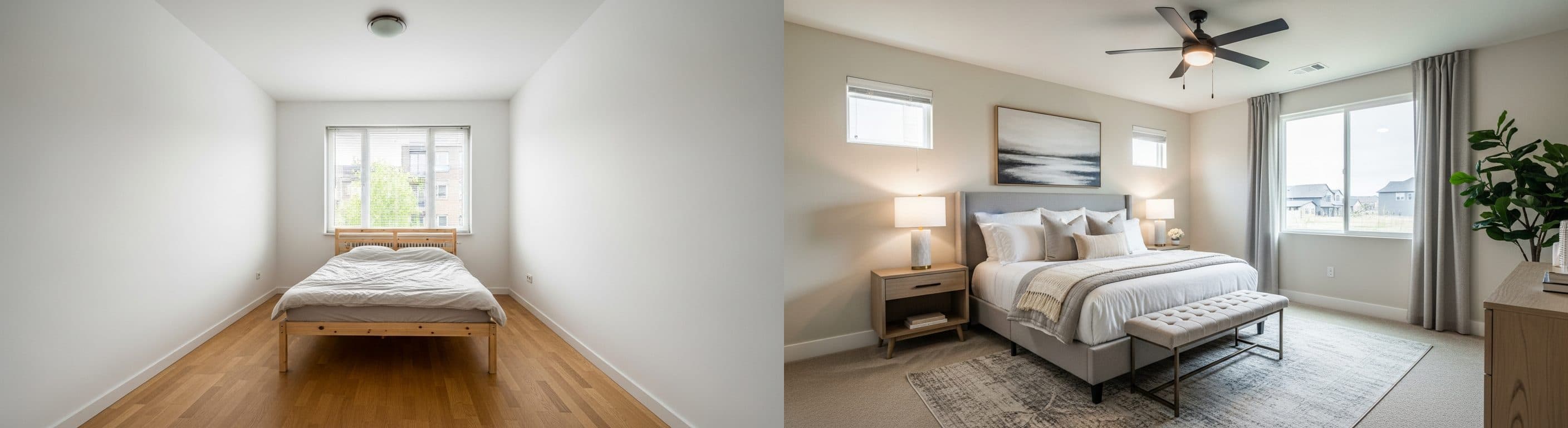
If your listing photos are “okay” but not compelling, your Open House promotion underperforms. Strong before/after visuals can lift attention and clicks because they communicate transformation instantly—useful for social ads, portal galleries, and email invites. This is where virtual staging is a fast lever, especially for vacant units.
If you want a fast, consistent look across multiple units (ideal for developers), use standardized virtual staging styles so every Open House asset feels like the same brand. That supports Markenkonsistenz in the Immobilienbranche and improves recognition over time.
Virtuelles Staging for Open House: when it beats physical staging
Virtuelles Staging for Open House is most effective when (a) the property is vacant, (b) the target buyer needs help understanding scale, or (c) you need speed and standardization across many listings. It can also improve ROI by reducing staging logistics while still upgrading perceived value in marketing assets.
- Best use cases: empty apartments, new builds, investor flips, properties with dated furniture, remote sellers.
- Combine with on-site minimal styling: clean, bright, neutral scent, and a strong info station.
- Use the staged images everywhere: portal gallery, Open House event post, email invite, printed brochure cover.
Marketing your Open House: increase listing CTR and attract the right visitors
The goal isn’t maximum foot traffic—it’s maximum qualified intent. Your marketing should filter and pre-qualify while still creating momentum.
The 5-channel promotion stack (simple and repeatable)
- Portals/listing refresh: update headline, add Open House time, add 3 “story bullets” (light, layout, upgrades).
- Email invite: send to your buyer list + neighbors (neighbors often bring buyers).
- Social: 1 teaser post (T-3), 1 reminder (T-1), 3–5 story slides on event day.
- Signage: directional signs placed strategically (check local rules).
- Retargeting: create a small audience from listing visitors and run a 2-day reminder ad (optional).
For marketing ideas and scripts, useful references include Real Estate Webmasters on Open House marketing, Tom Ferry’s strategy, and The Close: Open House ideas.
How to pre-qualify without scaring people away
Use “soft gates”: a friendly sign-in, a clear next-step offer, and two short questions. This improves lead quality and reduces time wasted on unqualified visitors.
- Sign-in prompt: “We’ll send you the floor plan + disclosure link after your visit.”
- Question 1: “What’s your ideal move-in timeline?”
- Question 2: “Have you already clarified financing / pre-approval?”
- Optional: “Are you also looking in other neighborhoods?” (helps segmentation)
Lead capture & follow-up: the system that turns visits into offers
Many Open Houses fail in the last mile: leads are collected but not converted. High-quality leads from Open Houses often convert 2–3x more frequently because visitors have already invested time and emotional attention—if you follow up fast and specifically.
Your sign-in flow (QR-first, paper backup)
- QR code at the entrance + on the brochure cover.
- Form fields: name, phone, email, buyer/seller, timeline (0–3 months / 3–6 / 6+), financing status, notes.
- Consent checkbox for follow-up (adapt to your local legal requirements).
- Paper sheet as backup for low-signal buildings.
Follow-up cadence (T+0 to T+48h)
| When | Channel | Message focus | Who |
|---|---|---|---|
| Within 30 minutes | SMS/WhatsApp | Thank you + link to floor plan/disclosures + ask for feedback | All sign-ins |
| Same evening | Recap highlights + next available private showing slots | Warm + hot | |
| Next day | Phone call | Qualification + objection handling + book showing | Hot leads |
| 48 hours | Email/SMS | “Last call” for next-step slots + answer questions | Warm leads |
For follow-up best practices, see ActivePipe’s follow-up guide and checklist approaches from Lab Coat Agents.
Copy/paste follow-up scripts (short and effective)
- SMS (all): “Thanks for coming by [address] today. Here’s the floor plan + details: [link]. Quick question: what did you like most—and what’s missing for you?”
- SMS (hot): “I can offer a private 15-min slot today/tomorrow. What works better: 17:30 or 18:15?”
- Call opener: “What would you need to see/know to feel comfortable taking the next step?”
- Email subject: “Your visit to [address] + next steps”
Häufige Einwände Open House (and how to answer them)
Objections are normal. The goal is to respond calmly, factually, and with a clear next step. For additional seller-focused guidance, compare Realtor.com’s seller checklist and The Balance on seller Open House tips.
| Objection | What it really means | Best response | Next step |
|---|---|---|---|
| “Open Houses attract only nosy neighbors.” | Fear of low-quality traffic | “We use sign-in + two quick questions and focus on buyers with a timeline. Neighbors often bring buyers, too.” | Offer a pre-invite list + qualification plan |
| “I’m worried about theft.” | Safety concern | “We remove valuables, keep private rooms closed, and have a helper present. We also track visitors via sign-in.” | Show the safety checklist |
| “It’s too much time and stress.” | Overwhelm | “We standardize the process: a 2-hour window on the weekend + a clear timeline. You’ll know exactly what happens when.” | Share the T-14 to T+48 plan |
| “We should wait until it’s perfect.” | Perfectionism delays market feedback | “We’ll do quick wins now and collect buyer feedback. Waiting often costs momentum.” | Schedule a staging sprint + date |
| “The price is firm.” | Anchoring | “Understood. Let’s use the Open House to validate demand and see how many qualified buyers take a next step.” | Agree on KPI-based review |
Budget Open House: what to spend (and what not to)
You can run a professional Open House on a small budget if you prioritize presentation, signage, and lead capture. The biggest waste is spending on extras while the property still looks cluttered or the follow-up is slow.
| Budget level | Typical spend | What you get | Best for |
|---|---|---|---|
| Lean | €0–€100 | DIY signs, basic printouts, water/coffee, QR sign-in | Private sellers, low-margin listings |
| Standard | €100–€300 | Better signage, higher-quality brochures, light refreshments, small decor touches | Most agents and teams |
| Premium | €300–€800+ | Branded materials, pro photos/video, targeted ads, enhanced staging | Luxury listings, developer launches |
Quick budget win: use free online tools for flyer design, then print a small batch. Keep refreshments simple. Put the saved money into better visuals (photos or virtual staging) because that improves CTR and pre-qualifies visitors.
Standardisierung Open House für Bauträger: scaling events without losing brand consistency
Developers and multi-unit sellers need a repeatable system: same visitor experience, same brand cues, and the same lead pipeline every weekend. This is where standardization and virtual staging styles can dramatically reduce prep time while keeping quality high.
The “Open House in a box” SOP (standard operating procedure)
- One brand template set: brochure, feature sheet, signage, QR sign-in landing page.
- One staging style guide: neutral palette + consistent accent color (supports Markenkonsistenz).
- One lead scoring model: hot/warm/cold definitions + next-step rules.
- One follow-up automation: SMS + email sequences triggered by sign-in.
- One reporting dashboard: visitors, qualified leads, next-step rate, offers, CTR lift.
For broader strategy inspiration, see RealTrends on Open House strategies and idea collections from FitSmallBusiness.
YouTube: walkthrough planning + checklist mindset
Open House Checklist for Home Sellers
Use video internally to train your team (or yourself) on consistent flow. The point is not to copy a script word-for-word, but to standardize the visitor journey: welcome → explore → questions → qualification → next step.
Open House tips for private sellers (FSBO): keep it safe, simple, and structured
If you’re selling privately, you can still run a strong Open House—just keep the process tight. Your biggest advantage is authenticity; your biggest risk is lack of structure.
- Schedule on weekends for maximum demand (reduces the “time effort” objection).
- Ask a friend to help: one person greets, one monitors the property.
- Remove valuables and personal documents; lock away medications and keys.
- Use a QR sign-in and promise a useful takeaway (floor plan, feature list).
- Don’t negotiate on the spot—book a follow-up call or second viewing.
For additional seller-oriented checklists, see HouseLogic’s Open House checklist and Moving.com’s ultimate checklist.
FAQ: Open House planen (common questions)
FAQ
How long should an Open House be?
Typically 1.5–2.5 hours. Shorter can feel rushed; longer often reduces energy and follow-up speed. The best length is the one you can staff well and follow up on immediately.
What’s the best way to improve lead quality at an Open House?
Use a QR sign-in with a value exchange (floor plan/disclosure link), ask two soft qualification questions (timeline + financing), and offer specific next-step slots for private showings.
How can an Open House reduce time on market?
By concentrating demand into a short window, creating urgency, and accelerating second showings/offers—especially when the property is staged and the follow-up happens within 24 hours.
Do refreshments matter?
A little helps visitors stay longer, but cleanliness and presentation matter more. Keep it simple and low-mess (water, coffee/tea, small packaged snacks).
Should I use virtual staging for an Open House?
Yes, especially for vacant or visually weak listings. Virtual staging improves marketing assets (CTR, saves, shares) and helps buyers understand scale and layout before they arrive.
Final checklist: your repeatable Open House plan (copy for every listing)
- Define goal + KPIs (qualified leads, next-step rate, CTR lift).
- Run the T-14 to T+48 timeline (assign owners).
- Use the Ablaufplan Open House on event day (roles + micro-tours).
- Bring the Materialliste Open House (QR sign-in, brochures, signage, safety).
- Apply quick staging wins (declutter, light, textiles, entry moment).
- Follow up within 30 minutes, then within 24 hours (scripts + booking).
- Debrief and standardize improvements for the next event.
If you want faster results without heavy logistics, combine your Open House with strong visuals (including virtual staging) so your promotion performs better and your visitors arrive more convinced. Try HomestagingKI: 2 images free, fast online results, and clear before/after impact. See pricing & start
Sources
- Open House Timeline and Schedule (guide)
- Open House Tips for Sellers and Agents (guide)
- NAR Open House Study (study)
- Open House Checklist for Real Estate Agents (article)
- Open House Checklist (guide)
- Essential Open House Materials List (article)
- Open House Materials Checklist (guide)
- Open House Preparation Guide (guide)
- Tips for Hosting an Open House (article)
- Maximizing ROI with Open Houses (article)
- Calculating ROI for Open Houses (article)
- Open House Follow-Up Best Practices (guide)
- Lab Coat Agents Open House Checklist (guide)
- Open House Marketing Tips (guide)
- Tom Ferry Open House Strategy (article)
- Innovative Open House Ideas (article)
- Effective Open House Strategies (article)
- Open House Checklist: 10 Things to Do (article)
- Ultimate Open House Checklist (guide)
- How To Host A Successful Virtual Open House (article)
- Home Staging vs Virtual Staging How Does It Affect the Real Estate Sale? (youtube_placeholder)